Case Study 01
AI-Powered SEO Content Engine
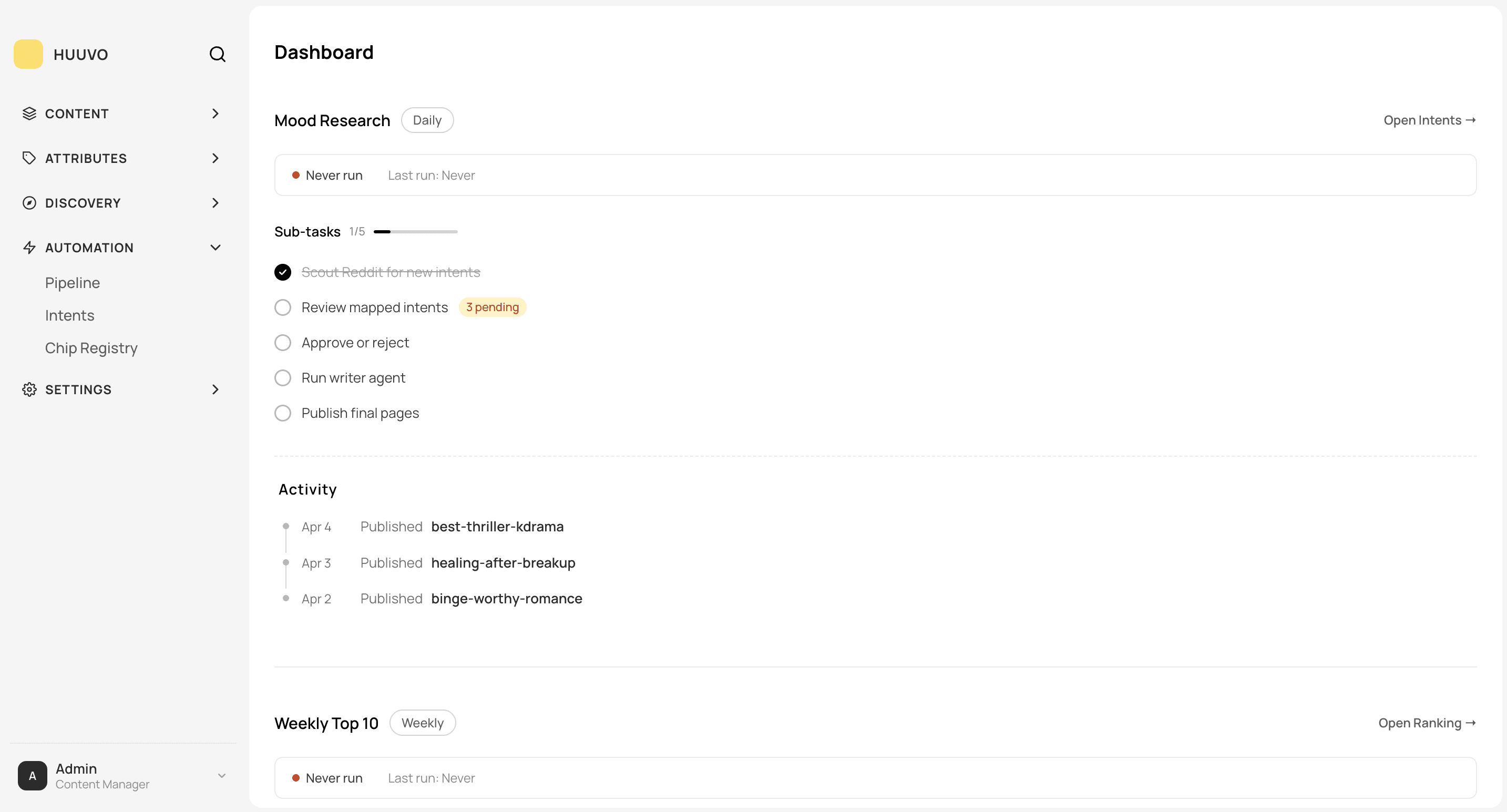
A supervised pipeline that transforms manual niche research into an automated publishing workflow, from Reddit intent discovery to performance tracking.
Overview
HUUVO helps US audiences discover K-dramas by mood and intent, not just title or genre. The engine streamlines the publishing pipeline: it pulls trending signals from Google Trends, crawls Reddit for real search intent, maps emotional needs to structured recommendations, generates SEO-optimized landing pages, and tracks which pages actually convert.
The Problem
The manual workflow ran across five separate tools with no shared state and no feedback loop. Keyword selection was gut instinct. Quality depended entirely on daily attention. At one page per day, building meaningful organic reach would have taken months.
The Approach
Turn signals into pages. Let performance decide what's next.
Four stages from demand discovery to publishing, each with a clear boundary between AI agents and human approval. AI handles crawling, mapping, and writing. Humans approve intents, payloads, and copy before anything goes live.
Discover & prioritize
Crawl Reddit for intent signals, dedupe, and rank by search potential.
Reddit crawlIntent extractionDedup & ranking
Approve intents
Map intent
Mapper converts approved intents into primary_pick, chips, and slug.
Intent → payloadPrimary pickChip assignment
Approve payload & drama lists
Generate content
Writer produces full EN/KO landing page content.
EN/KO contentBrand voice
Approve copy & brand voice
Publish & close the loop
Publisher POSTs to API, updates tracking sheet, and sends notification. Performance data feeds back to discovery.
API publishSheet syncFeedback loop
AI → Human
Discover & prioritize
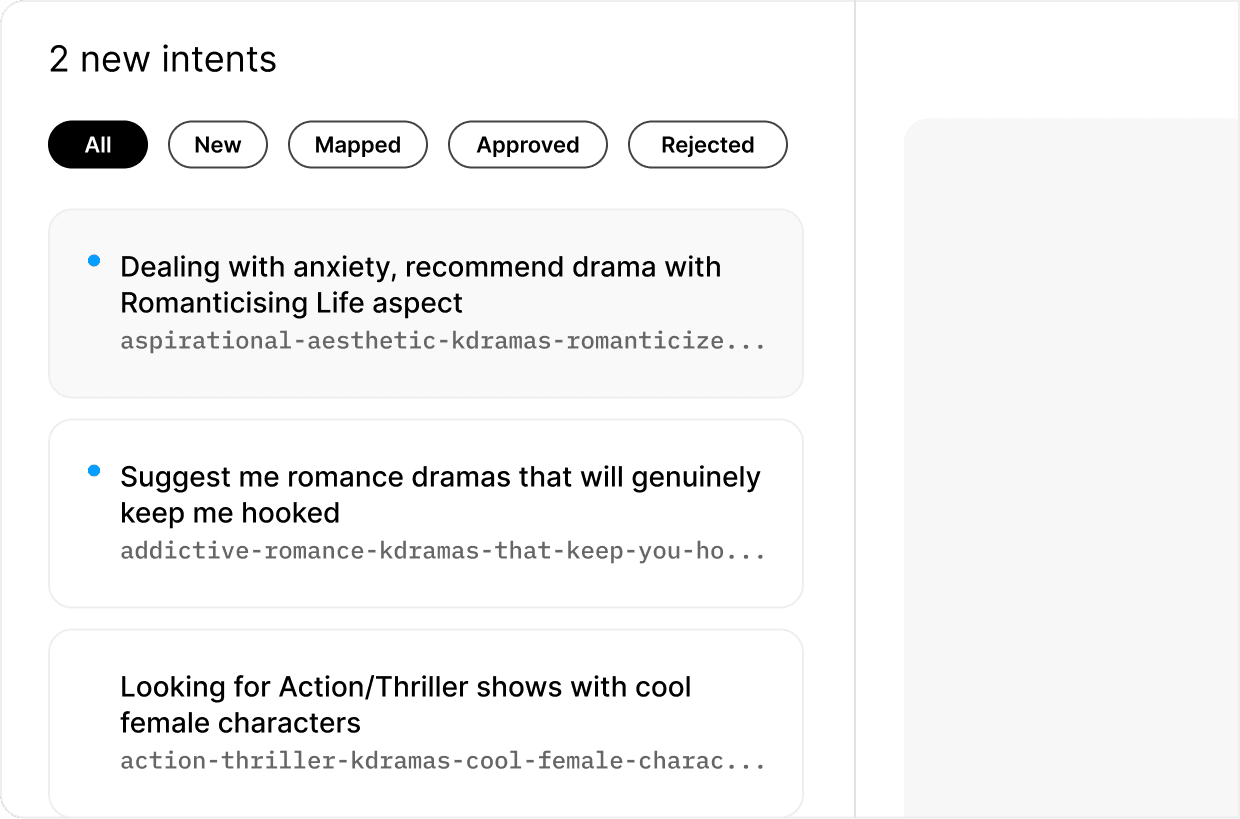
Scout crawls Reddit and scores engagement. Strategist dedupes and ranks by search potential. A human approves or rejects each intent before it moves forward.
AI → Human
Map intent
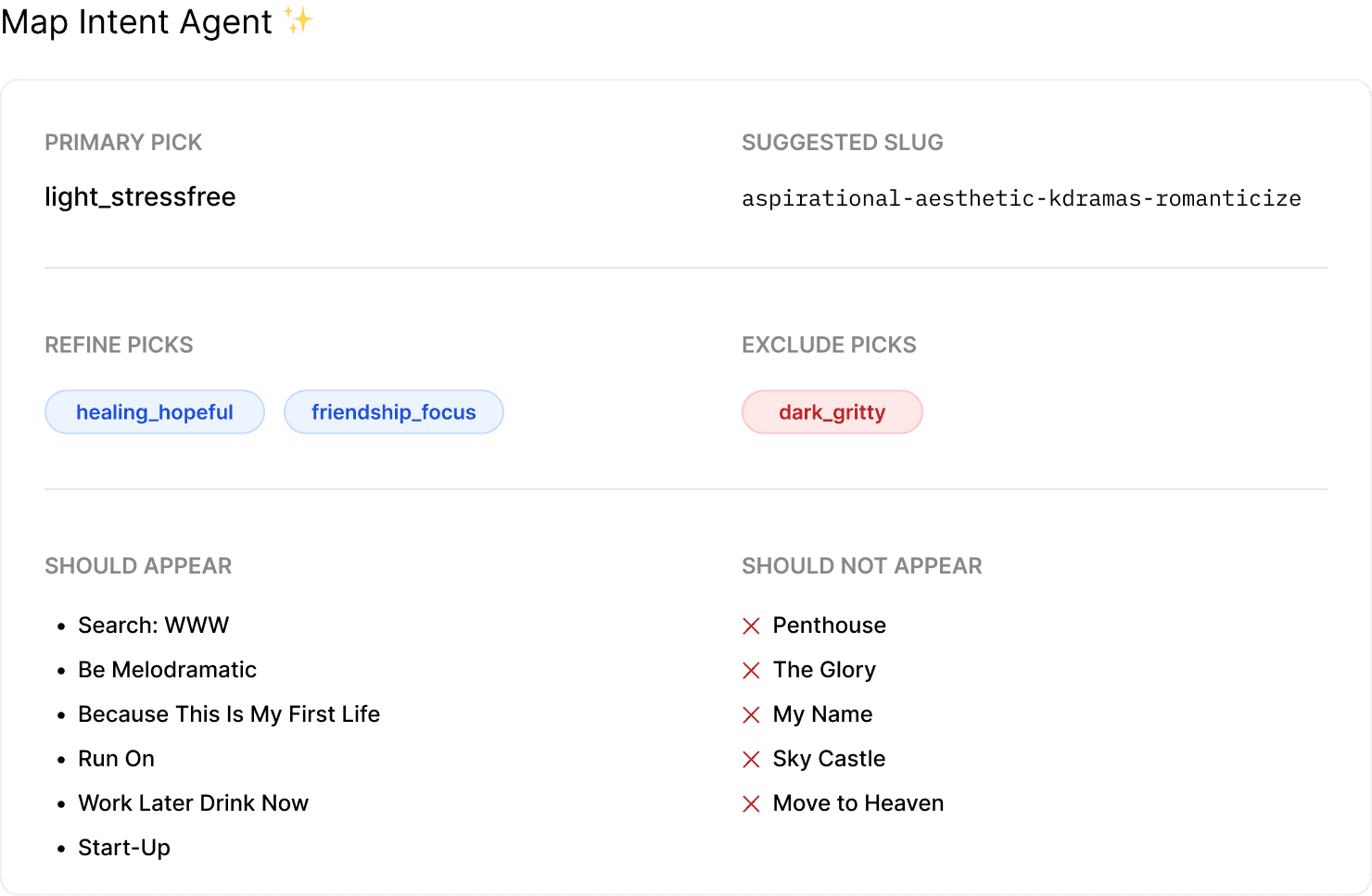
Mapper converts approved intents into structured payloads — primary_pick, chips, and slug. A human reviews the mapping and drama lists before generation begins.
AI → Human
Generate content
Writer produces full EN/KO landing page content. A human approves the Korean copy and brand voice before anything goes live.

Automated
Publish & close the loop
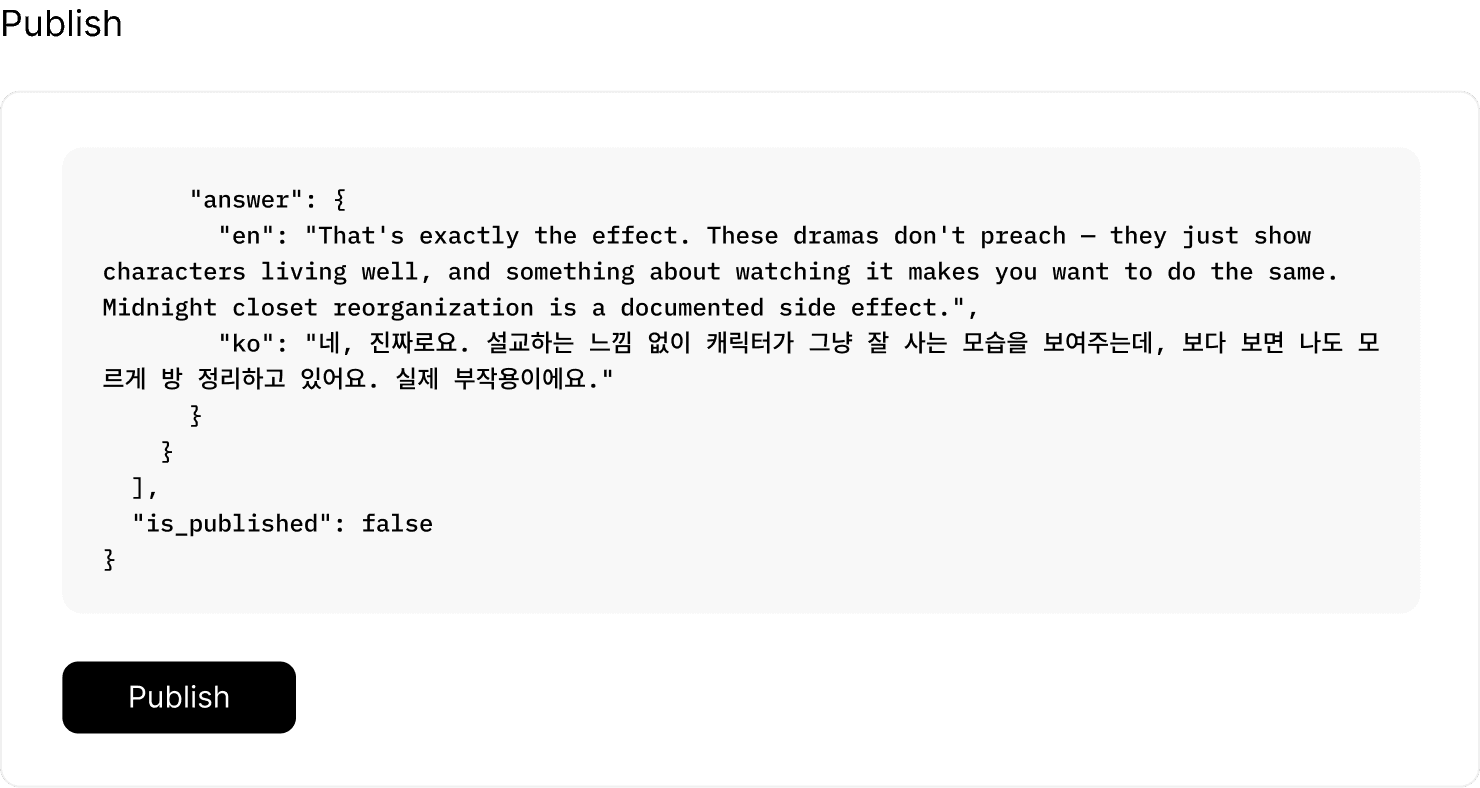
Publisher POSTs to the API, updates the tracking sheet, and sends a notification. Performance data feeds back to discovery so the system learns which intent types actually convert.
The Results
More output, higher precision
Publishing capacity went from one page per day to eight, with the same editorial overhead. But the bigger shift was closing the feedback loop: every page now tracks from initial search intent to final user conversion.
5–8× daily output
Page production went from 1 to 8 per day with the same editorial overhead.
Closed feedback loop
The first direct link between initial search intent and final user conversion.
Dual-optimization
Pages structured for both traditional search ranking and AI model discovery like Perplexity and ChatGPT.
Takeaways
Human checkpoints aren't a fallback. After an early full-auto test produced factual errors, editorial review became a design decision, not a bottleneck.
The hardest part isn't building agents. It's deciding where automation ends and judgment begins.
Designing for feedback loops early, even before they're fully automated, changes how every upstream decision gets made.
Say hi