Case Study 02
Mood Engine Dashboard
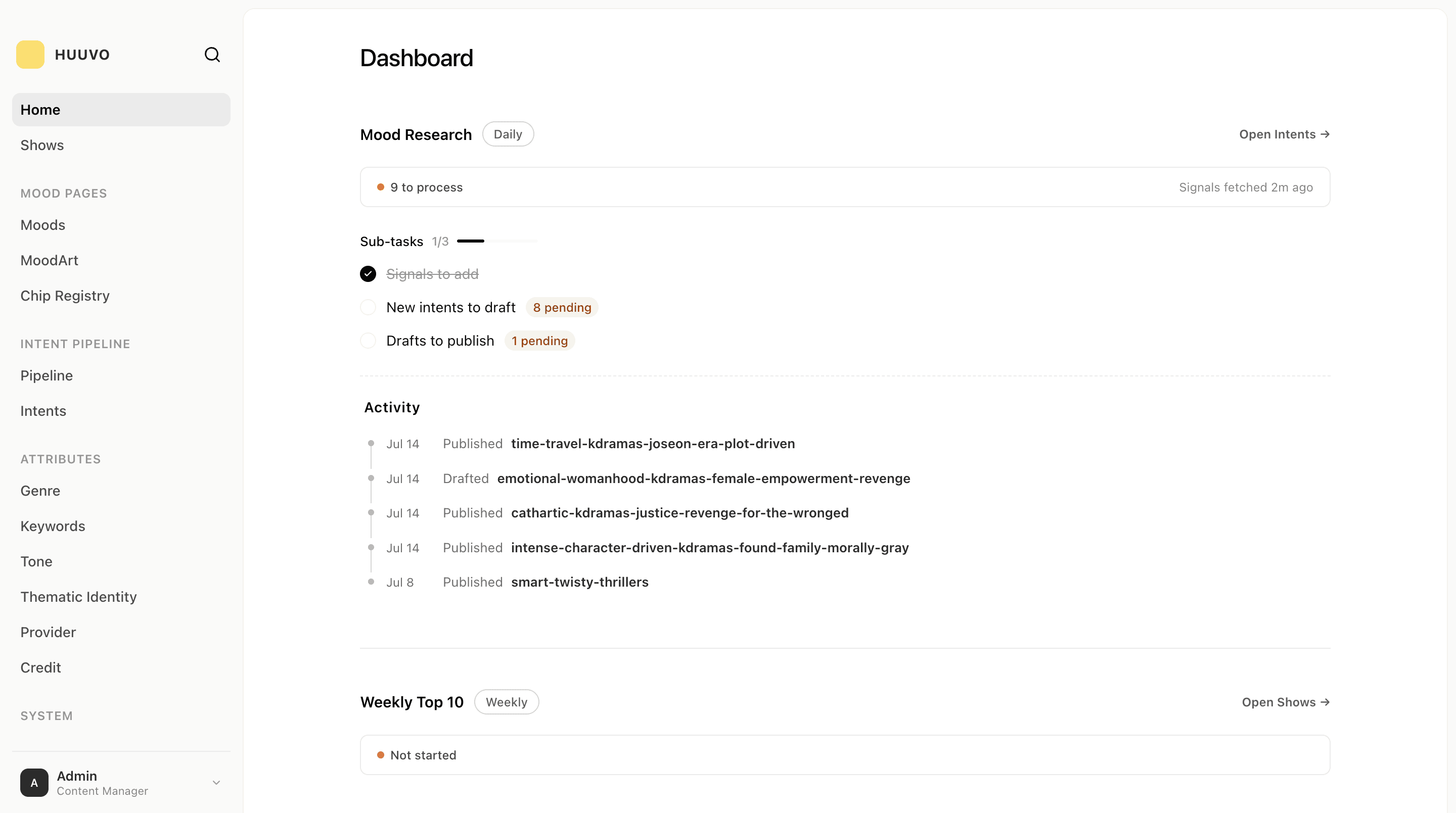
The system behind HUUVO’s mood-based discovery. I designed and built the dashboard to turn audience intent and emotion into structured data, AI drafts, and publishable mood pages.
The Problem
The challenge was turning how a show feels and what a viewer wants into usable data. Genres and keywords missed too much nuance, while requests like “something comforting after a rough week” were hard to organize at scale. AI could help structure them, but people still needed to review, correct, and approve the results.
The Approach
Translating a vibe into recommendation data
I organized the workflow into three parts: a mood model for each show, an intent pipeline for viewer requests, and a review process for AI drafts. Consistent tags keep the data clear, while source links, editable fields, and approval states keep people in control.
Demand signals
Starting with real viewer requests
I built the research that automatically brings in the latest audience posts. Each request keeps its original source and context, so the curator can clearly understand what the viewer was looking for.

Intent pipeline
Turning natural language into a structured draft
I created an AI-assisted flow that turns detailed viewer requests into mood tags, matching rules, page content, and other structured fields. The curator can review and edit before moving forward.

Show model
Describing how each show feels
I modeled each drama through curated attributes and five mood dimensions: stimulation, warmth, pacing, emotional weight, and complexity. This gives the recommendation engine a more useful picture than genre labels alone.

Recommendation logic
Making matching rules visible
I turned each viewer request into clear rules for what to include and exclude from the mood page. When the curator changes a rule, the recommended shows update right away, making it easy to see how each choice affects the results.

Human review
Keeping people in control
I created clear stages for drafting, review, readiness, and publishing. The source, AI draft, show data, and recommendation results stay visible in one workflow, and nothing is published automatically.

The Results
A dashboard for cleaner discovery data
I connected research, AI interpretation, show modeling, recommendation logic, editorial review, and publishing in one workspace. This made the process faster without hiding important decisions inside automation.
A connected source of truth
Audience signals, intent drafts, mood data, controlled tags, recommendation rules, and publishing states now live in one system.
AI output that can be inspected
Every generated draft remains linked to its source and can be reviewed, edited, approved, or rejected before it enters the product.
Consistent recommendation data
Shared dimensions, approved vocabulary, validation rules, and readiness checks keep the system coherent as more shows and mood pages are added.
Takeaways
Subjective information becomes useful when the system preserves several qualities at once. A drama should not be reduced to a single mood label.
AI quality depends on the interface around it. Source visibility, editable fields, controlled values, and approval states were as important as the model itself.
Internal tools shape the customer experience. Every data rule and review decision in this dashboard affects the recommendations viewers receive.
Designing the data model, interaction, and implementation together helped me prevent inconsistent states instead of correcting them after they appeared.
Say hi